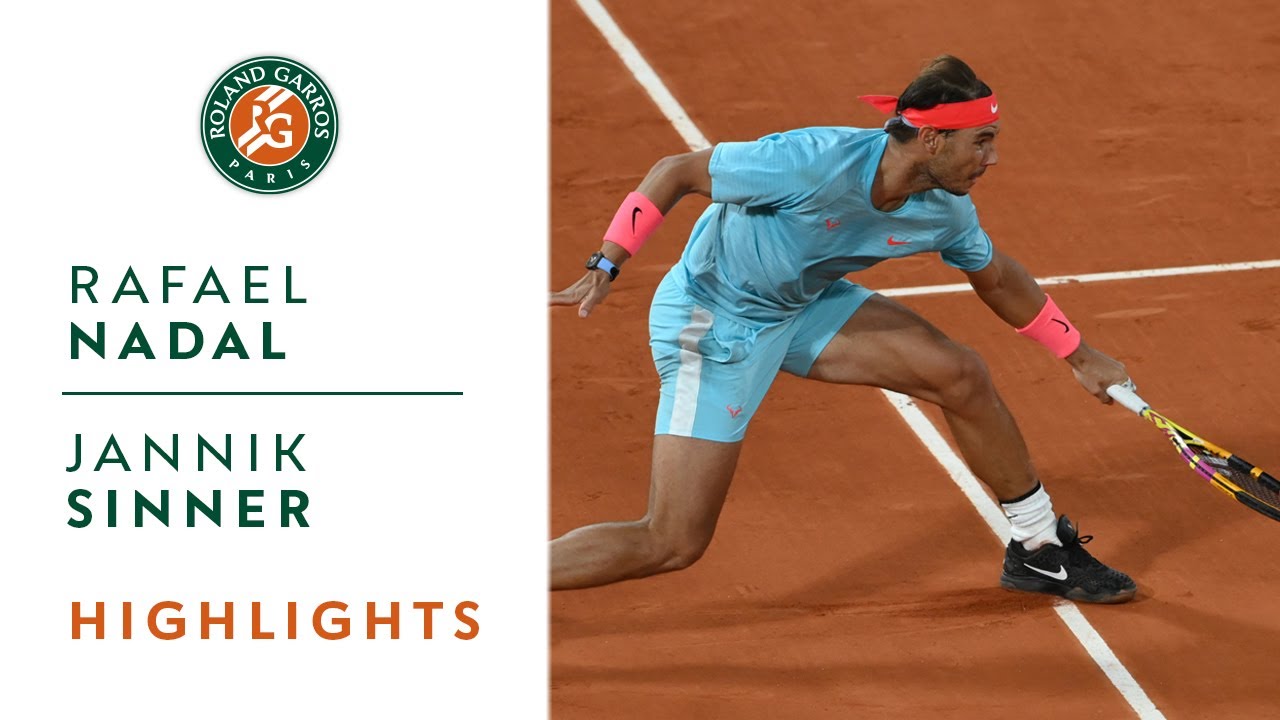
The hallowed red clay of Roland Garros has long been the stage for tennis legends, but few have dominated it with the ferocity and consistency of Rafael Nadal. Dubbed the "King of Clay," Nadal's reign at the French Open is unparalleled. Yet, even kings must face challenges, and in a highly anticipated quarterfinal clash, the Spanish maestro was set to meet a formidable young challenger: Jannik Sinner. This wasn't just any match; it was a generational showdown, pitting the undisputed monarch of the terre battue against a rising star whose ascent has been nothing short of meteoric.
A Clash of Eras: The King of Clay's Reign vs. Sinner's Rapid Ascent
For Rafael Nadal, Roland Garros is more than a tournament; it's his kingdom. His pursuit of a record-equalling 20th Grand Slam title, a feat currently held by Roger Federer, added immense weight to every serve, every forehand. Heading into this quarterfinal, Nadal had already showcased his unparalleled mastery, navigating through the early rounds without dropping a single set. This remarkable form was particularly impressive given the unusual conditions of an autumn French Open, with colder, heavier air and wetter courts—factors traditionally less favorable to his high-bouncing, topspin-heavy game.
Despite these challenges, Nadal adapted with characteristic grit and tactical brilliance. His statistics from the early rounds were telling: winning over 60% of points in short rallies (up to four shots), and an impressive 65% in both medium (5-8 shots) and long (9+ shots) rallies. These numbers exceeded his average over the past three years on the ATP Tour, demonstrating his exceptional ability to adjust and maintain peak performance. This quarterfinal marked his 14th appearance in the last eight at Roland Garros, and his 100th match at the tournament overall, a testament to his enduring legacy.
Across the net stood Jannik Sinner, a prodigious talent from Italy. At just 19 years old, Sinner embodied the future of tennis. His journey to the quarterfinal stage was a story of rapid development and fearless play. A year prior, Sinner didn't even have a high enough ranking to enter the qualifying rounds of Roland Garros. Now, he was not only in the main draw but had carved a path through some significant names, defeating two Top 15 players, David Goffin and Alexander Zverev, along the way. Like Nadal, Sinner too reached the quarterfinals having lost only one set, showcasing his dominant form and composure under pressure.
Sinner's rise was not just a flash in the pan; he had already proven his mettle by winning the Next Gen ATP Finals, a tournament designed to showcase the sport's brightest young talents. His rapid, powerful groundstrokes and aggressive style promised a thrilling contest against Nadal's relentless defense and offensive precision.
Echoes of the Past: Sinner's Debut Mirrors a Young Nadal
One of the most compelling narratives surrounding the Nadal-Sinner quarterfinal was the striking parallel between Sinner's Roland Garros debut and Nadal's own historic first appearance. In 2005, Nadal burst onto the scene at Roland Garros, reaching the quarterfinals in his debut before going on to lift the trophy. Fifteen years later, Jannik Sinner became the first player since Nadal to reach the final eight in his very first main draw appearance at the clay-court Grand Slam.
This symmetry was not lost on Nadal himself. In a candid interview on Andy Roddick's podcast "Served with Andy Roddick," Nadal spoke highly of the new generation, specifically praising Sinner. "Jannik is young, he's improving every week," Nadal remarked, acknowledging the challenge Sinner presented. "I've practiced with him a few times. I see huge potential in him. Jannik swings the racquet very fast and has the ability to hit great shots." Nadal further lauded Sinner's character, noting that he is "a good guy" who has "overcome a difficult year" with impressive resilience, highlighting his "incredible values." These compliments from the King of Clay himself underscored the respect and admiration Nadal held for his young opponent, not just as a player but as a person. Read more about Nadal's appreciation for Sinner's character here: Nadal Praises Sinner's "Incredible Values" & Future Potential.
Sinner, while confident, approached the match with a clear understanding of the monumental task ahead. "Playing against Nadal at Roland Garros is never easy," he shared. "He is very confident here, after all the records he has achieved. I have to approach the match with a good attitude, try to play my best tennis. That's what I have to do if I want to be at the same level as him." This blend of respect and fierce determination defined Sinner's mindset, mirroring the very attitude that propelled Nadal to greatness in his formative years. Discover more about Sinner's journey and its parallels with Nadal: Jannik Sinner's Ascent: Echoes of Young Nadal at Roland Garros.
Tactical Showdown: Analyzing the Battle on Philippe Chatrier
The quarterfinal on Philippe Chatrier was always going to be a fascinating tactical battle. Nadal's game, characterized by his heavy topspin forehand, incredible defense, and relentless mental fortitude, is uniquely suited to clay. His ability to turn defense into offense, coupled with his famous "lasso" forehand, makes him incredibly difficult to break down on this surface. Even in cooler, damper conditions, his tactical adjustments—like hitting flatter or using more slice—demonstrated his adaptability.
Sinner, on the other hand, brought a more aggressive, power-oriented game. His two-handed backhand is a formidable weapon, capable of piercing through the court, and his forehand is equally potent. To challenge Nadal effectively, Sinner would need to:
- Serve Big and Consistently: Gaining free points or setting up easy first balls would be crucial to avoid prolonged rallies against Nadal.
- Dictate with Forehand: Sinner's powerful forehand needed to find its mark, pushing Nadal deep and preventing him from setting up his own offensive patterns.
- Attack Nadal's Backhand: While Nadal's backhand has improved significantly, it remains an area Sinner could target to create discomfort and open up the court.
- Control the Baseline: Sinner thrives on hitting from the baseline. He would need to be disciplined in staying aggressive without overhitting, finding the balance between power and precision.
- Maintain Mental Toughness: Playing Nadal on Chatrier is a psychological gauntlet. Sinner's ability to stay focused, believe in his game, and not get discouraged by Nadal's resilience would be key.
Nadal, conversely, would aim to exploit Sinner's relative inexperience in deep Grand Slam matches against a legend. His strategy would involve:
- Grinding Rallies: Drawing Sinner into long, physical exchanges to test his stamina and patience.
- Targeting the Backhand Cross-Court: A classic Nadal tactic to push opponents wide and open up the court for his forehand down the line.
- Using the angles: Manipulating the court with severe angles to make Sinner run and play uncomfortable shots.
- Capitalizing on Break Point Opportunities: Nadal's conversion rate on break points is usually high, and against a strong server like Sinner, every opportunity would count.
Beyond the Quarterfinals: The Road Ahead
The winner of the Nadal vs Sinner quarterfinal faced another immense test in the semifinals against either Dominic Thiem or Diego Schwartzman. Both were in scintillating form. Thiem, the reigning US Open champion, was riding an 11-match winning streak, a testament to his growing confidence and hard-court success translating to clay. Schwartzman, meanwhile, had recently reached the final of the ATP 1000 event in Rome, where he had achieved the rare feat of defeating Rafael Nadal on clay just weeks prior. This added another layer of intrigue, as the path to the final for either Nadal or Sinner was paved with formidable opponents.
This match was more than just a quarterfinal; it was a barometer for the future of men's tennis. For Nadal, it was another step towards cementing his place as arguably the greatest male player of all time. For Sinner, it was an invaluable experience, a true test of his burgeoning talent against the ultimate clay-court challenge. Regardless of the outcome, this encounter was destined to be a memorable chapter in the annals of Roland Garros history.
The clash between Rafael Nadal and Jannik Sinner at Roland Garros was a thrilling spectacle, embodying the timeless narrative of established greatness confronting rising ambition. Nadal's unyielding dominance on clay met Sinner's explosive youth and fearless approach, creating a contest that resonated with tennis fans globally. It was a match that not only highlighted the incredible achievements of the "King of Clay" but also illuminated the immense potential of the next generation, with Jannik Sinner leading the charge, ready to etch his own name into the sport's illustrious history.